Complete News Archive

Industry: Creality unveils the Falcon T1C dual-laser engraver — 15 W blue diode plus 5.5 W infrared, galvo speeds to 6,500 mm/s
On 17 November, Creality announced the Falcon T1C, a compact dual-laser engraver built for personalization businesses: a 15 W blue diode laser for wood, bamboo, leather and dark acrylic, plus a 5.5 W infrared laser for precision metal marking. A high-speed galvo setup reaches scan speeds of up to 6,500 mm/s in specified image engraving modes, with spot sizes as fine as 0.03 x 0.03 mm. Pre-orders are open now ahead of a global launch in mid-December 2026; the standalone edition lists at US$1,699 in the US, with a US$50 deposit bringing the pre-order price to US$1,199.

Industry: Nikon SLM Solutions unveils MACHX at Formnext — up to 8 kW of laser power for series metal production
On 17 November, Nikon SLM Solutions unveiled MACHX at Formnext 2026 in Frankfurt: a new family of metal laser powder bed fusion systems built for series production, not prototyping. Three build envelopes share one architecture — the MACHX 450 (450 x 450 x 450 mm), 450C (450 x 600 x 450 mm) and 450E (450 x 450 x 1,000 mm) — with up to 8 kW of laser power and a 25-minute changeover between builds. The pitch is throughput density: more production per square metre of factory floor.

Industry: OMNIVISION and Myriad Fiber launch the VINERA surgical visualization platform — a 100-micron laser illumination fiber for endoscopes
On 16 November, OMNIVISION and Myriad Fiber Imaging (MFI) jointly launched the VINERA surgical visualization platform: OVMed medical image sensors (up to 2 megapixels) and image-processing technology, combined with MFI’s new laser illumination fiber — as small as 100 microns, delivering high-intensity, wide-angle illumination over 140 degrees. The platform targets laparoscopy, hysteroscopy, endoluminal robotic surgery, urology and other applications, and will be demonstrated at OMNIVISION’s booth 8a|D01 at COMPAMED in Düsseldorf, Germany, on 16–19 November.
Industry: Lambda runs NVIDIA Photonics CPO switches across 10,000+ GPUs — latency down up to 10.1%
On 16 November, Lambda announced the world's first large-scale deployment of co-packaged optics (CPO) networking: NVIDIA Photonics switches connecting more than 10,000 NVIDIA Blackwell Ultra GPUs at its Quebec campus. In Lambda's benchmarks against conventional pluggable optics, the CPO switches held throughput identical while cutting network latency by 3.8% at rack scale and 10.1% at pod scale, with the optics running at a median 36 °C versus 51 °C. It is the first time CPO has been shown working at AI-factory scale, not just in a lab or a pilot rack.

Industry: POWDERBED launches Core 1 — an off-the-shelf scanner and laser controller for laser powder bed fusion, with open-source machine software
POWDERBED (a brand of Danish company Aagaard AM) has launched Core 1, a ready-made single-laser desktop controller for laser powder bed fusion (LPBF): it pairs a SCANLAB RTC6 Ethernet scan controller with the Autodesk Machine Control Framework (AMCF, open-source under the BSD-3 licence), supports the SL2-100 and XY2-100 scanner protocols, and costs €9,900 net. Customers supply their own mechanics, optics and laser, and POWDERBED configures the controller for their specific laser and scanner. Core 1 will be shown for the first time at Formnext 2026 in Frankfurt, 17–20 November, at the Sensortherm stand.

Research Watch: Micron-precision depth control in ultrafast-laser volumetric ablation — an OCT closed loop cuts deviation from over 20 µm to 1–2 µm
On 15 November, a team at the Institut für Strahlwerkzeuge (IFSW), University of Stuttgart, published an open-access paper in Scientific Reports: combining an ultrafast laser (600 fs, 1030 nm) with a galvanometer scanner and a coaxial optical coherence tomography (OCT) system for real-time closed-loop depth control, they volumetrically ablated AISI 304 stainless steel with a depth accuracy of 1–2 µm for target depths of 50–500 µm. Two corrections — extrapolation-based compensation of an initial depth offset and a pixel-wise moving-average termination criterion — cut the deviation of the basic closed loop, which exceeded 20 µm: a 100 µm target measured 99.7 µm, a deviation of only 0.3 µm.

Research Watch: Chirality-locked low-dimensional BIC lasers — low-threshold lasing localized at one-dimensional interfaces and zero-dimensional junctions
On 14 November, teams at Seoul National University and Kyung Hee University published an open-access paper in Nature Communications: rotating the four-hole square-lattice unit cell by +6° and −6° to interface two domains of opposite chirality, they realized low-threshold bound-state-in-the-continuum (BIC) lasers localized at the one-dimensional interface between the domains and at the zero-dimensional junction where four quadrants meet — the interface laser peaks at 1590 nm with a threshold of about 0.4 kW/cm², the junction laser peaks at 1564 nm with a threshold of about 0.65 kW/cm², both linewidths narrowing to about 0.3 nm, with the Q factor inferred to exceed 5000.

Industry: LightSolver to give the first public demonstration of its all-optical computer — the Laser Processing Unit heads to SC26
On 11 November, LightSolver, a subsidiary of CollPlant, announced that its Laser Processing Unit (LPU) will be demonstrated in public for the first time at the SC26 supercomputing conference in Chicago on 16–19 November, solving systems of linear equations, differential equations and complex optimisation problems live with interacting laser beams. The LPU computes without electronic components and is designed to work alongside conventional GPUs; the same event will also feature its PDE-based corrosion simulation work with Boeing.

Research Watch: Upconversion nanoparticles boost blue emission ~1,500-fold — a single-system white laser comes closer
On 11 November, a team from Harbin Institute of Technology and the University of Technology Sydney published an open-access paper in Nature Communications: a core@shell cascaded-transition strategy selectively populates the high-lying dormant states of holmium ions (Ho3+), boosting blue emission ~1,500-fold over conventional architectures and delivering balanced red, green and blue output under 10 W/cm² excitation. The single-system white light beats mixed-nanoparticle media on stability and produces white lasers for photonics.

Industry: Xanadu and HyperLight cut optical switch loss to 7 millidecibels — thin-film lithium niobate photonic quantum hardware takes another step
On 10 November, Xanadu Quantum Technologies and HyperLight announced that optical switch insertion loss has been cut to 7 millidecibels (mdB) using thin-film lithium niobate (TFLN) technology — nearly three times better than the partners’ 20 mdB result from 2025. The result was demonstrated on a high-volume wafer line on HyperLight’s TFLN Chiplet™ platform, with what the companies describe as excellent yield and repeatability; Xanadu says its quantum-compatible switches are ready to ramp to production.

Industry: India’s first indigenous hybrid laser-arc welding system unveiled — Cochin Shipyard and SFO open laser engineering centre
On 11 November, India’s SFO Technologies and Cochin Shipyard (CSL) unveiled the country’s first indigenously designed and manufactured hybrid laser-arc welding (HLAW) system and inaugurated a new Advanced Laser Engineering Centre with a dedicated HLAW R&D facility. The system integrates laser welding, conventional arc welding, robotics and automation around a high-power fibre laser source developed in-house by SFO, aimed at thick-plate welding for shipbuilding, defence and heavy engineering.

Industry: TRUMPF welds 14 cm of steel in a single pass with vacuum laser deep welding — a 50 kW laser sets a deep-welding record
On 9 November, TRUMPF announced that, together with RWTH Aachen University, it has used a 50 kW high-power laser to join steel to a depth of 14 cm in a single welding operation — a record for laser deep welding; the previous comparable laser processes reached 6 cm. The new process, laser welding in a vacuum (LaVa), welds under a reduced ambient pressure of 50 mbar and uses BrightLine Weld beam shaping so the beam penetrates deeper than at normal pressure. TRUMPF says thick-walled steel components could be completed with far fewer weld passes, saving energy, time and cost.

Research Watch: A femtosecond laser directly figures and finishes freeform optics — 1.0 nm RMS figure error on borosilicate glass
On 9 November, the Rochester Institute of Technology (RIT) reported that Professor Jie Qiao’s team has used a femtosecond laser to directly figure and finish freeform optical surfaces, shaping and polishing in a single step with no separate polishing stage. The underlying paper was published in Optics Express on 21 July 2026 (open access): an experimentally characterised and numerically optimised point influence function models the surface response, iterative scan-path deconvolution generates the fabrication trajectories, and Zernike-polynomial freeform surfaces on borosilicate glass reach a root-mean-squared figure error of 1.0 nm.

Industry: OIF launches seven new projects at once — external laser source ELSFP 3.0 alongside 448G electrical interfaces
On 9 November, the Optical Internetworking Forum (OIF) announced seven new technical projects at its quarterly technical meeting in Bangkok, spanning 448G electrical interfaces, 200G bidirectional optical transmission, external laser sources, module management and coherent optical security — a direct response to AI data centres’ demand for bandwidth, energy efficiency and interoperability. Most relevant to lasers are two external-laser-source projects: the ELSFP Implementation Agreement advancing to revision 3.0, and an elongated Type-3 ELSFP supporting a 40W high-power mode.

Industry: UK military satellite Titania reaches orbit — laser satellite-to-ground communications testbed enters commissioning
On 7 November, the UK Ministry of Defence confirmed that the military satellite Titania is in orbit: the roughly 100 kg spacecraft launched on 1 October aboard a SpaceX Falcon 9 and is operated by UK Space Command under the ISTARI programme. Titania’s original mission is to demonstrate low-Earth-orbit satellite-to-ground free-space optical communications (FSOC) — returning reconnaissance data to an optical ground station via a narrow laser beam, with the builder targeting a 10 Gbps in-orbit optical demonstration. The 7 November announcement, however, emphasises Earth observation and reports no laser-link verification results; the satellite has now entered a commissioning period lasting several months.

Research Watch: Laser speckle spectrometer breaks into the femtometre scale — 6 fm resolution at 780 nm, about 80 times better than before
On 7 November, Nature Communications published research from the University of Adelaide: using an integrating sphere as a multiply scattering cavity, a laser speckle spectrometer has broken into the femtometre scale for the first time — 6 fm resolution at 780 nm, a resolving power of 1.3×10⁸, about 80 times better than previous speckle spectrometers. The device clearly resolves laser sidebands from an electro-optic modulator and directly measures the hyperfine structure of the ⁸⁵Rb D2 transition, agreeing with independent wavemeter measurements. The paper is open access (CC BY 4.0).

Research Watch: Thin-film lithium niobate directly hosts all-optical memristors — 3-bit multilevel non-volatile optical memory at hundreds of femtojoules per bit
On 6 November, Nature Photonics published research from Shandong University: using CMOS-compatible oxygen-ion implantation, spatially separated oxygen-doped and defect-rich layers are formed in thin-film lithium niobate, turning this widely used photonic platform itself into an all-optically controlled memristive material — photonic memristors can be fabricated directly on lithium niobate waveguides, with no heterogeneous integration. The devices demonstrate 3-bit multilevel non-volatile memory, switching energies of hundreds of femtojoules per bit and submicrosecond optical response. The full text is subscription-only; this item is compiled from the publicly available abstract and publication record.

Laser Safety 101: Before Your First Job
Before your first laser job, set three baselines: how to protect your eyes, what to check before switching on, and what to do first when something goes wrong. Using a first project — engraving a small wooden nameplate — this lesson explains eyewear wavelength and OD, what MPE and NOHD mean, and the check-and-watch habits for the whole job.

Industry: Applied Optoelectronics’ Q3 2026 revenue hits $269.9 million, up 127.5% year over year — a 1.6T long-term agreement locks in $1–1.5 billion as in-house laser capacity races to expand
On 5 November, Applied Optoelectronics (Nasdaq: AAOI) reported results for the third quarter of 2026 (ended 30 September 2026): revenue of $269.9 million, up 127.5% year over year and 40.6% sequentially — a sixth consecutive quarterly record — and a return to GAAP profitability, with net income of $6.3 million, or $0.07 per share (versus a net loss of $17.9 million, or $0.28, a year earlier); non-GAAP net income was $14.8 million, or $0.17 per diluted share (versus a $5.4 million loss a year earlier). Datacenter revenue reached $155.6 million, up 254% year over year and about 58% of total revenue; 800G product revenue nearly quadrupled sequentially to $47.5 million. In October the company signed a multi-year 1.6-terabit transceiver agreement with a Tier 1 hyperscale datacenter customer, expected to generate $1–1.5 billion over three years; a second agreement, potentially five times larger and covering 800G products and laser components, is in the final stages of negotiation. Fourth-quarter revenue is guided at $385–420 million.

Industry: nLIGHT’s Q3 2026 revenue reaches $73.8 million, up 10.5% year over year — defense and advanced manufacturing drive growth, product gross margin hits a record
On 5 November, nLIGHT (Nasdaq: LASR) reported results for the third quarter of 2026 (ended 30 September 2026): revenue of $73.76 million, up 10.5% year over year and above the high end of its August guidance; gross margin of 33.1%, up from 31.1% a year earlier; adjusted EBITDA of $11.05 million, up 55.4%; non-GAAP net income of $10.2 million, or $0.16 per diluted share (versus $4.3 million, or $0.08, a year earlier); and a GAAP net loss of $7.18 million, or $0.12 per share. By line, products revenue was $48.05 million and development revenue $25.72 million, up 34.4% year over year. The company guided fourth-quarter revenue of $84–90 million, while about $15 million of product revenue is deferred to the first half of 2027 on supply-chain constraints.

Industry: Denmark awards Saab a direct framework agreement for laser duel-simulation training systems — BT46 I-LDS valued at SEK 3.75 billion
On 5 November, the Danish Defence Acquisition and Logistics Organisation (DALO) published a direct-award notice granting Saab a framework agreement for additional BT46 I-LDS instrumented laser duel-simulation systems, valued at an estimated SEK 3.75 billion with a maximum of SEK 4.75 billion; the agreement runs from 17 November 2026 to 17 January 2037, with an option for a five-year extension. The systems support realistic duel training for infantry and combat vehicles and must be fully compatible with the Danish Defence’s existing BT46 systems. The Danish Army field-tested the system at Oksbøl earlier this year; in March 2025 the Danish Ministry of Defence announced an I-LDS procurement for a combat battalion of about 1,000 soldiers and 200 vehicles, then estimated at around DKK 0.6 billion. Note: under the same-batch staggering rule this item is displayed on 4 November; the event date is 5 November.

Research Watch: Plasma wakefield accelerator drives a water-window X-ray laser — end-to-end simulations reach gigawatt-class coherent femtosecond pulses
On 5 November, Nature Communications published research from the University of Strathclyde, Heinrich Heine University Düsseldorf and ELI Beamlines: end-to-end simulations show that ultra-bright electron beams from a plasma-photocathode wakefield accelerator can drive wavelength-tunable, coherent, femtosecond X-ray laser pulses in the water window (2.3–4.4 nm) from a metre-scale undulator, at gigawatt-class peak power. The paper is open access (CC BY 4.0). The work is simulation-based and has not yet been demonstrated experimentally.

Industry: Coherent’s fiscal Q1 2027 revenue hits $2.37 billion, up nearly 50% year over year — datacenter & communications at 82% as AI optical interconnect becomes the growth engine
On 4 November, Coherent Corp. reported results for the first quarter of fiscal 2027 (ended 30 September 2026): revenue of $2.370 billion, up 49.9% year over year (56% on a pro forma basis) and 15.9% sequentially; GAAP gross margin of 39.1% and non-GAAP gross margin of 40.6%; GAAP diluted EPS of $1.90 and non-GAAP diluted EPS of $2.09 (up 80% year over year). By segment, datacenter & communications revenue reached $1,951.7 million, up 79% year over year and about 82% of total revenue, while industrial revenue was $418.6 million, below the $491.4 million of a year earlier. The company also raised its outlook: fiscal 2027 pro forma revenue growth is expected to exceed 60%, second-quarter fiscal 2027 revenue is guided at $2.55–2.75 billion, and Coherent expects its first $3 billion quarter before the end of fiscal 2027 and its first $4 billion quarter in fiscal 2028.

Industry: IPG’s Q3 revenue reaches $287.5 million, up 15% year over year — welding and additive manufacturing lift industrial sales, semiconductor laser revenue more than doubles
On 3 November, IPG Photonics reported third-quarter 2026 results (for the quarter ended 30 September 2026): revenue of $287.5 million, up about 15% year over year, the fourth consecutive quarter of double-digit year-over-year growth; GAAP net income of $20.3 million, or $0.47 per diluted share (versus $0.18 a year earlier); adjusted EPS of $0.61 and adjusted EBITDA of $51.5 million, up 39% year over year. By segment, industrial solutions revenue was $239.5 million, up 12% year over year, with welding the principal driver; advanced solutions revenue was $48.0 million, up 33% year over year, with semiconductor laser revenue more than doubling. The company guides fourth-quarter revenue at $265–295 million and expects to close its acquisition of Lumibird Medical in the fourth quarter.

Industry: Innolight’s first near-package optics device enters early production — AI optical interconnect moves from pluggable modules toward the package
On 3 November, Tower Semiconductor and Innolight announced continued collaboration on near-package optics (NPO): Innolight’s first NPO device has entered early production using Tower’s PH18M silicon photonics process flow at Tower’s factory in California, USA, while multiple NPO products have taped out on Tower’s 300mm silicon photonics platform for future product generations. The release notes that NPO architectures typically carry substantially more optical channels than conventional pluggable modules, often integrating 16 or more channels on a single device, and can monolithically integrate multiple photonic functions — including wavelength-division multiplexing and demultiplexing — on one chip. Tower describes Innolight as a cornerstone manufacturing customer across four of its facilities (Newport Beach, California; San Antonio, Texas; and one site each in Israel and Japan). The release discloses no production volume, customer names, bandwidth or power figures.

Industry: TCI Cutting puts AI into fibre-laser cutting motion control — IA Smart Motion 2.0 reads the path ahead, holds speed on straights and slows only for corners
On 3 November, Spanish sheet-metal laser-cutting machine builder TCI Cutting introduced IA Smart Motion 2.0®: artificial intelligence built directly into the motion control of fibre laser cutting machines. The system predictively analyses the upcoming cutting path and adaptively adjusts speed and acceleration to the workpiece’s actual geometry — modulating motion early as the head approaches curves or tight radii, holding high speed on straight stretches, and rounding and braking only where precision requires it. The technology spans TCI’s 2D, 2D+Bevel and 3D fibre laser cutting solutions, with the company claiming smoother movements, optimised contour quality and reduced mechanical wear. The same ecosystem is TCI’s MAS Concept®: Manager PRO® production-management software networks shop-floor planning in real time, while the TCI Sorter 3.0® automated palletising system uses Smart Sorting® AI logic to decide extraction strategies autonomously and arrange parts on pallets by priority for subsequent steps.

Industry: Marvell to acquire Lumentum in a $115B all-stock deal — AI optical interconnect’s “electrical” and “optical” sides under one roof
On 2 November, Marvell and Lumentum announced a definitive agreement under which Marvell will acquire Lumentum in an all-stock transaction: each Lumentum common share converts into 4.500 Marvell common shares, at an implied enterprise value of about $115 billion — roughly $1,132 per Lumentum share, a premium of about 23.9% over the companies’ unaffected closing prices on 28 October, the last trading day before market speculation began. On completion, current Marvell stockholders will own about 67% of the combined company on a fully diluted basis and Lumentum stockholders about 33%. Both boards have approved the deal unanimously; closing is expected in the first half of 2028, subject to both companies’ stockholder and regulatory approvals. Marvell says the combination expands its addressable market to $550 billion and offers line of sight to more than $1 billion in annual run-rate cost synergies. Lumentum’s fiscal first-quarter 2027 results, released the same day, show net revenue of $1.2626 billion, up 136.5% year over year, with pump lasers and optical circuit switches (OCS) the leading contributors; the company also announced a second major near-packaged/co-packaged optics (NPO/CPO) win backed by purchase commitments exceeding $5 billion.

Research Watch: Ultrashort laser pulses slice diamond along its difficult plane — an 8×8 mm CVD diamond split cleanly on {100}
On 1 November, Professor Hirofumi Hidai’s team at Chiba University, Japan, published a study in Diamond and Related Materials: first comparing how three single-crystal diamonds — one grown by high-pressure high-temperature (HPHT) synthesis and two by chemical vapour deposition (CVD), with different nitrogen impurity levels — respond to ultrashort laser pulses, then turning the findings into a large-area slicing demonstration. Irradiating samples with focused pulses from 233 femtoseconds to 30 picoseconds, the team found CVD diamonds could be modified with much shorter pulses than the HPHT diamond; in the CVD samples the shortest pulses left tiny, separated marks, while pulses of about 10 picoseconds or longer produced more continuous modified regions; nitrogen content alone could not explain the differences between samples, pointing instead to microscopic defects tied to each crystal’s growth history. The team then applied 10 picosecond pulses to an 8 mm × 8 mm CVD diamond, writing a grid of modified regions inside it and progressively adding points midway between existing ones; after four such rounds, the diamond split cleanly along the {100} plane with a light tap from tweezers — an area about 710 times larger than the team’s earlier 300 µm-square HPHT result. The {100} plane is the easiest to polish, making it especially important for practical use.

Research Watch: Photon-pairing dual-comb spectroscopy crosses 400 km of fibre — spectra reconstructed at just 5.5×10⁻¹⁵ W per comb line
On 31 October, Jinping Lin, Lai Zhou and colleagues at the Beijing Academy of Quantum Information Sciences published a photon-pairing-enhanced distributed spectroscopy sensing study in Nature Communications. Tackling the phase-fluctuation problem in photon-counting dual-comb spectroscopy, the team replaced first-order interference with a second-order-correlation photon-pairing scheme, removing the need to phase-align interferograms and allowing long integration times. Over a 400 km fibre link in a distributed configuration, they accurately reconstructed intensity spectra at an average received power of only 5.5×10⁻¹⁵ W per comb line, with a signal-to-noise ratio above 23.5 dB and strong resilience to fibre-induced fluctuations. The reconstructed spectra’s signal-to-noise ratio grows linearly with photon count rate, unlike the square-root dependence of conventional photon-counting methods. The authors point to long-haul dual-comb spectroscopy, frequency metrology, remote sensing and quantum networking as prospective uses.

Industry: Orbital Lasers signs with JAXA — altimeter lidar to fly on HTV-X for in-orbit demonstration, with “area” mapping aimed at commercial 3D geo-data
On 30 October, Japanese space-laser startup Orbital Lasers announced a research and development contract with the Japan Aerospace Exploration Agency (JAXA) to develop the mission unit — the observation payload — of an Altimeter Lidar-Imager System, to be flown aboard JAXA’s new HTV-X resupply spacecraft for an in-orbit demonstration of the full chain from laser emission through reception of reflected and scattered light to ranging. The contract builds on conceptual design, prototyping and evaluation work carried out under a fiscal 2024 agreement between the two sides. Orbital Lasers’ approach differs from the norm: pairing an in-house high-power space laser with single-photon-sensitive detectors, it aims for “area” measurement — one illumination continuously covering a wide swath and returning dense point clouds — rather than the conventional along-track “line” scan, with an onboard imager adding optical imagery to refine geolocation. The company plans to use the HTV-X demonstration as a springboard to commercial lidar satellites, eventually a constellation, targeting accuracy and point density comparable to airborne laser surveys for land and infrastructure management, disaster mitigation, forestry and digital twins.

Industry: Benewake launches SR series 360° 3D lidar — SR18 in mass production, 190 g, 5 W and $299 aimed at mobile robots
On 30 October, Benewake announced the SR series of 360° 3D lidars for mobile robots, launching with the 18-channel SR18 and the 96-channel SR96, of which the SR18 is now in mass production. The SR18 measures 71.8 mm in diameter and 64 mm in height, weighs 190 g and draws no more than 5 W on average; it detects objects as close as 15 cm and as far as 30 m at 10% reflectivity, with 360° horizontal coverage and a vertical field of view from −8° to +40°, in an IP66-rated enclosure rated for −20°C to +60°C. The company says its integrated transmitter-receiver architecture — each laser emitter paired with a dedicated photodetector — reduces inter-channel crosstalk and keeps mapping and localization stable in highly reflective environments, while downward-angled channels catch low obstacles and terrain changes. The SR18 is priced at $299 and goes on sale worldwide from 30 November 2026 through Mouser Electronics, Amazon, Robu.in and Alibaba.com.

Industry: INLEAP’s new Hanover plant enters series production — FASTLIGHT HELD laser counter-drone system moves from prototype to volume, first units to STARK
On 29 October, Germany’s INLEAP Photonics announced that its new Hanover production facility for laser counter-drone systems would open on 30 October, moving the INLEAP® FASTLIGHT® HELD system from prototype development into industrial series production, with ramp-up and further deliveries beginning in November 2026 and the first turnkey systems handed to partner STARK at the same time. HELD (High Energy Laser Drone) is mounted on an all-terrain unmanned ground platform: it detects, tracks and identifies a drone, then directs the laser beam at its critical structural components to neutralise it within seconds; ultra-fast laser beam steering lets it track and engage moving targets with high precision, providing remotely operated protection for mobile units, temporarily secured areas and critical infrastructure. The line runs on one-piece flow — each system passing individually through six coordinated stations with no intermediate storage — to cut lead times and scale with demand. The company employs 50 people today and plans to grow its Hanover workforce beyond 100 by the end of 2027.

Industry: xTool X1 launches worldwide — galvo plus gantry motion in one machine, swappable across five laser sources
On 29 October, xTool announced worldwide availability and immediate shipping of its flagship laser engraving and cutting platform, the X1: it packs a high-speed Flying-Galvo system and a large-format Dragon-Gantry workspace into one machine, driven through a synchronized 4-axis linkage so engraving speed and working area no longer trade against each other, while a 4,000-ton high-pressure die-cast aluminum frame suppresses micro-vibration and visible seams at speed. The core is the LaserSwap™ modular ecosystem: starting from a 55W CO₂ module or a hybrid 55W CO₂ / 20W diode galvo setup, users add quick-connect “backpack” modules for 30W fiber, 60W MOPA and 5W UV sources; the Automated Creation System™ (ACS™) pairs a triple-camera system with sub-millimeter positioning and an AutoLift Base for a “Place & Go” workflow. Launch pricing runs from $3,399 for the single-CO₂ version to $6,679 for the top configuration (CO₂ + diode galvo + MOPA).

Research Watch: Ultrasonic vibration direction and amplitude decide SiC wafer laser thinning — a 2-inch wafer thinned to 100 μm
A study published on 29 October in the Journal of Laser Applications sets out process rules for thinning SiC wafers by chemical-assisted laser ablation: vertical power devices require wafers thinned to 100 μm or less, but traditional laser ablation suffers low material removal rate and poor surface quality. Combining laser ablation with ultrasonic-vibration-assisted chemical etching, the authors find bidirectional vibration gives larger thinning depth than single-direction vibration, vertical vibration gives the smoothest surface, and larger vibration amplitude boosts material removal rate while reducing surface roughness, oxygen content and remelted-layer thickness, via enhanced cavitation, acoustic streaming and ion transfer; under optimized parameters, a 2-inch SiC wafer was successfully thinned to 100 μm with fine surface quality.

Industry: MicroVision’s Q3 lidar revenue hits a record — $2.4M, twelve times a year earlier, as gross margin turns to 50%
On 28 October, MicroVision reported third-quarter 2026 results: lidar revenue of $2.4 million, a quarterly record and twelve times the $0.2 million of a year earlier; nine-month revenue of $4.8 million, nearly five times the $1.0 million of the same period in 2025. Gross margin swung from negative a year earlier to 50%, and net loss narrowed from $14.2 million to $12.2 million ($0.45 per share). The company reiterated full-year 2026 revenue guidance of $10–15 million and expects 2027 revenue to at least double, with operating cash burn falling to about $40 million. Growth was driven by second-half demand for IRIS sensors and the MOVIA Pro, which entered production earlier in October; defense, intelligent transportation and AI data-center optical connectivity are the new revenue directions.

Research Watch: UMD leads a $7.5M MURI project to tame intense lasers with structured light — compact accelerators and air waveguides in sight
On 27 October, the University of Maryland announced a $7.5 million Department of Defense Multidisciplinary University Research Initiative (MURI) award, supported through the Air Force Office of Scientific Research, for a team led by Distinguished University Professor Howard Milchberg to study how shaping intense femtosecond laser pulses in space and time can control matter. Six universities take part, with affiliated researchers from the U.S. Naval Research Laboratory, the Air Force Research Laboratory, Lawrence Livermore National Laboratory and Los Alamos National Laboratory. Goals include better compact particle accelerators, new radiation and strong magnetic-field sources, and temporary “air waveguides” that guide a later beam through the atmosphere.

Research Watch: The 40-year “green problem” finally explained — why intracavity-doubled green lasers are noisy mode by mode yet quiet in total
On 26 October, Thomas M. Baer, adjunct professor of applied physics at Stanford, wrote in Laser Focus World to explain his 2026 Physical Review A paper: in an intracavity-doubled green laser, each of about 200 longitudinal modes blinks and switches at nearly 100% modulation in bursts tens of microseconds long — yet the total output holds steady at 0.05% rms (DC to 10 MHz). The key is that the doubling crystal is not a one-way converter: it turns green light back into infrared, feeding each mode the phase of the pair that produced it. A fourth-moment functional decreases monotonically on every forward pass through the crystal (a theorem proved in the paper), driving the mode ensemble toward a constant-intensity state. The mechanism was confirmed in an Nd:YVO4 + LBO laser: full-beam versus Fabry-Pérot-filtered noise contrast of 100×, far beyond the statistical-averaging baseline.

Industry: Phase3D launches purpose-built inspection hardware for laser powder bed fusion — structured-light layer measurement moves from off-the-shelf assembly to volume production
On 27 October, TCT Magazine reported that Phase3D has launched a new generation of Fringe Inspection hardware for laser powder bed fusion (LPBF) additive manufacturing systems. The product follows a multi-year development effort: at its heart is a projector customized for LPBF inspection, with an industrial PC, GPU, memory and internal storage integrated into one aluminium passively cooled enclosure, and M12 connectors plus four 5–24 V hardware trigger channels aimed at machine integration and OEM adoption. Structured light measures the build surface during the process, producing quantitative layer-by-layer height data used to investigate powder-bed changes, locate anomalies and quantify their magnitude.

Research Watch: Seven passes through the sample settle the loss budget of ceramic laser materials — Yb:YAG ceramic scattering 0.0093/cm, absorption on par with scattering
On 26 October, a team associated with the 11th Research Institute of China Electronics Technology Group Corporation reported in Applied Physics B (open access, CC BY 4.0) a method combining an integrating sphere with a multipass cell: a 1064 nm beam passes seven times through each sample, cutting the measurement uncertainty for low-loss materials to one seventh of the single-pass value. Comparing pure YAG and Yb:YAG (0.35 at%) ceramics against single crystals of identical composition gave scattering coefficients of 0.0046/cm for YAG ceramic and 0.0093/cm for Yb:YAG ceramic, with absorption coefficients of 0.0267/cm and 0.0221/cm respectively, close to the crystals. In a 10 mm rod model the ceramic’s parasitic loss was about 0.0314 versus 0.0108 for the crystal — roughly triple — yet at 40% output coupling the two loss factors remained close (0.927 versus 0.974).

Industry: Lumibird’s 9M revenue up 8.8% to €168.8M — Photonics +13.5%, photonic medtech +75.9%
On 26 October, European laser technology group Lumibird reported revenue for the first nine months of 2026: consolidated €168.8 million, up 8.8% (+10.3% like-for-like), with third-quarter revenue of €54.1 million, up 12.0%. The Photonics division reached €86.8 million, up 13.5%, including photonic medtech at €16.6 million, up 75.9% (Q3 alone +117.2%), and Defence & Space at €41.8 million, up 10.3%. The Medical division grew 4.3% to €82.0 million, recovering to +14.4% in Q3. The company expects a record fourth quarter and confirmed the Medical division sale will complete by 31 December 2026 at the latest.

Research Watch: Femtosecond-laser-written gradient waveguide arrays achieve high-fidelity Bloch-oscillation self-imaging — point-to-point energy recovery above 99% in an 8 mm period
On 23 October, a team from Jilin University’s State Key Laboratory of Integrated Optoelectronics and Wuhan Institute of Technology reported in Laser & Photonics Reviews a femtosecond-laser-written composite-waveguide platform that lifts the propagation-constant-gradient limit of conventional laser-written lattices. Combined with sawtooth-profile modulation that locally tailors the effective potential, the design enables tunable Bloch-oscillation dynamics with better wavepacket confinement. Point-to-point imaging recovered more than 99% of the energy in a compact 8 mm period, and the platform transmitted binary-encoded sequences and two-dimensional images in parallel across 633–852 nm with high reconstruction fidelity.

Industry: HSG Laser shows TS2 PRO tube laser and AI CutPilot at FABTECH 2026 — U.S. business up ~200% YoY as the company turns 20
On 23 October, HSG Laser announced via PR Newswire its FABTECH 2026 line-up (21–23 October, Las Vegas Convention Center, booth C3425): the flagship TS2 PRO tube laser cutting machine and the AI process assistant AI CutPilot headlined the stand, alongside a 20th-anniversary ceremony themed “Forged by Laser • Empowered in the Next 20 Years”. The release also disclosed North America milestones: U.S. business growing ~200% year over year, the 500th machine delivered in the U.S., and a 77,000-square-foot Technical & Solution Center running in Geneva, Illinois. The GH series, Store Pro sheet automation, the GFA large-format cutting solution, HC and HS bending systems and teaching-free robotic welding rounded out the showcase.

Research Watch: Spin-decoupled metasurface enables self-healing helical vector beams — trajectory and polarization controlled independently
On 23 October, a team from the University of Padova, Q-TECH and MetaPhoX reported in Laser & Photonics Reviews “helical vector beams” — structured fields merging the spatial polarization structure of vector beams with the self-accelerating spiral dynamics of accelerating waves. A single spin-decoupled metasurface independently controls the response of left- and right-handed circular polarizations; engineering dynamic and geometric phase lets it prescribe the three-dimensional beam trajectory and the local polarization order independently. Telecom-wavelength metasurfaces, made by electron-beam lithography and reactive ion etching, also self-healed both their spatial profile and programmed vectorial state in obstruction experiments.
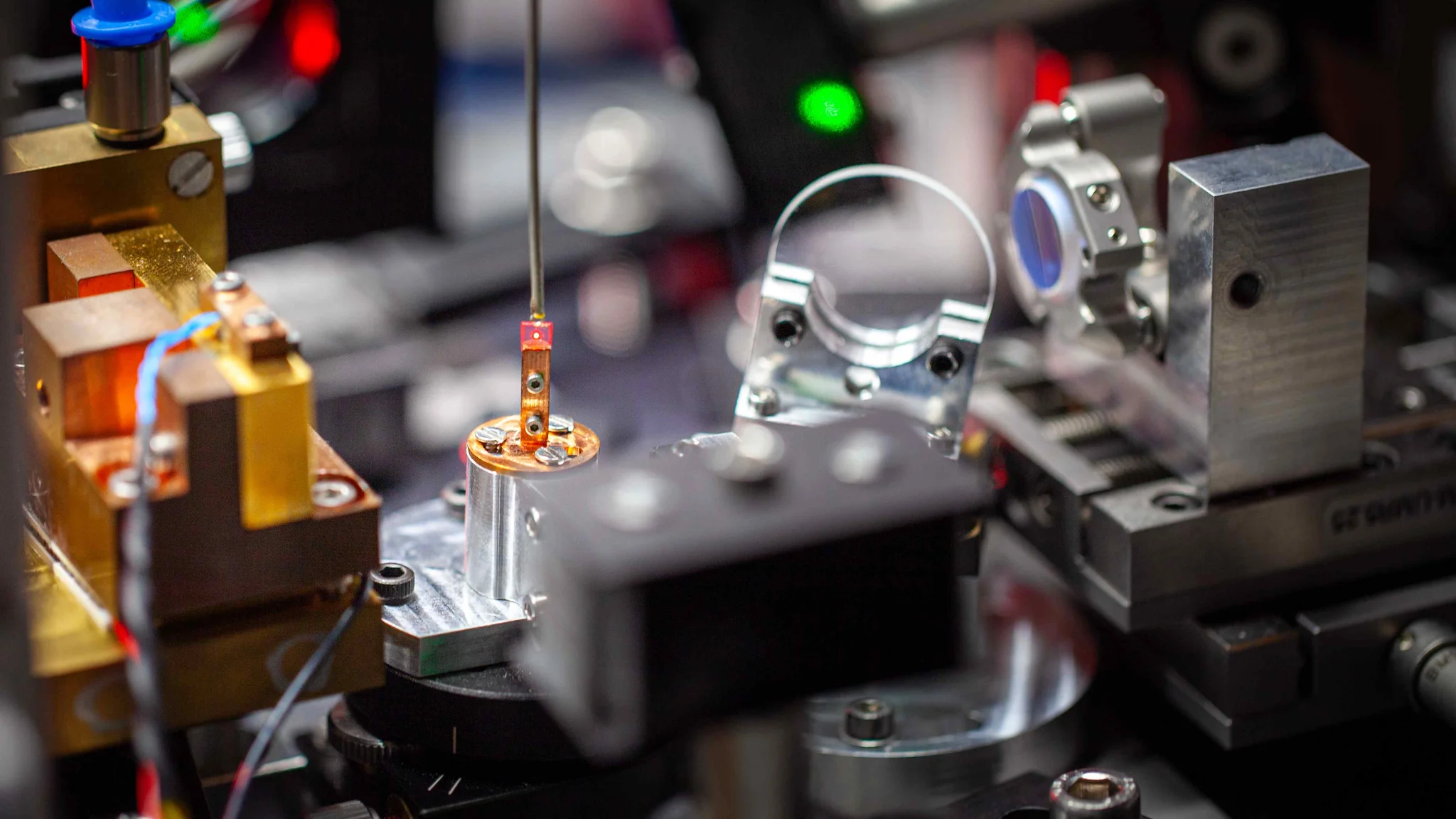
Research Watch: Fraunhofer IAF diamond laser-threshold magnetometer hits 100% optical contrast — up to 590x better sensitivity-to-range ratio
On 22 October, Jan Jeske’s team at the Fraunhofer Institute for Applied Solid State Physics (IAF) reported an experimental breakthrough in laser threshold magnetometry (LTM) in Nature Communications: placing an NV-centre-doped diamond in a 1,042 nm laser cavity as a magnetic-field-dependent loss channel and reading out the magnetic field via the laser signal itself, they achieved the first 100% optical contrast in NV magnetometry (versus a few percent for conventional fluorescence readout). Combined with a coherent laser readout signal of up to 50 mW, sensitivities below 400 fT/√Hz were reached for all three magnetic-field vector components; the sensitivity-limit-to-dynamic-range ratio improves by up to 590x over conventional fluorescence-based NV sensors and vapour-cell magnetometers, while keeping vector capability and an intrinsic dynamic range of several hundred microtesla. The paper is open access (CC BY 4.0), DOI 10.1038/s41467-026-78386-z.

Research Watch: Technion steers electron flow in an STM with sculpted two-colour laser fields — current bursts last just 860 attoseconds
On 22 October, the Technion – Israel Institute of Technology announced that Prof. Michael Krüger’s physics team has achieved precise directional control of electron flow inside the nanoscale gap of a scanning tunnelling microscope (STM) using carefully sculpted infrared laser pulses. Comparing measurements with models, the team reconstructed current bursts lasting just 860 attoseconds, while retaining about 2 nanometres of lateral resolution and sub-ångström height sensitivity — at room temperature and in air. The key: two colours of femtosecond infrared light are focused into the tunnelling gap between the tip and the sample; changing the relative timing of the two colours reshapes the optical waveform, steering electrons from tip to sample or back. Instead of repeatedly switching the laser on and off, the team varied the timing, separating the true ultrafast current from laser-heating noise. The work appears in Nature Photonics (nature.com article s41566-026-02021-y), a step toward an atomic-scale spatiotemporal microscope that can watch electrons move and locate them at once; Krüger sees it as a possible reference for future lightwave-driven electronics.
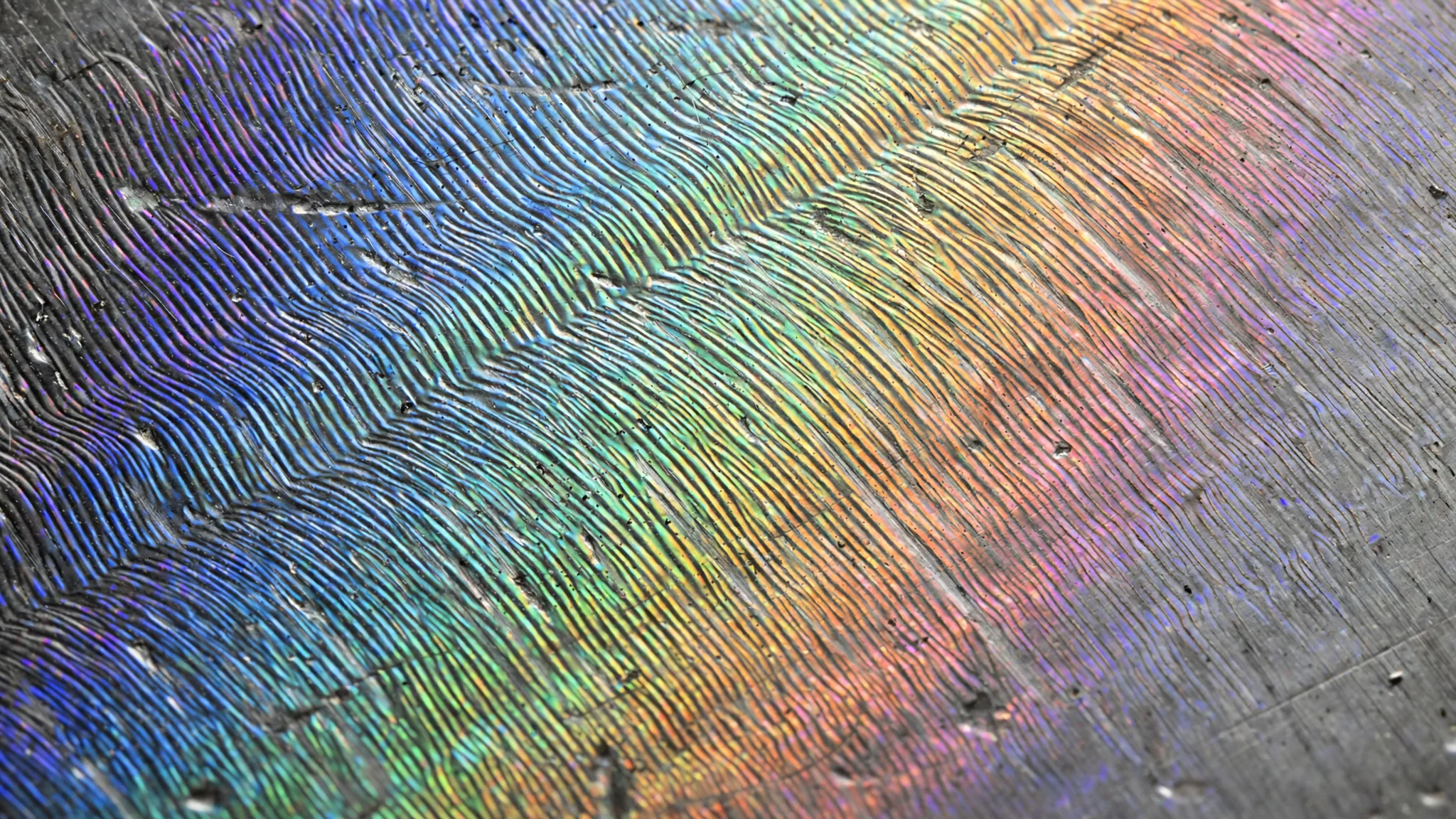
Industry: SurFunction and Precitec to industrialize laser-interference functional surfaces — ELIPSYS platform goes global via a 23-country sales and service network
On 23 October, Photonics Spectra’s weekly brief reported that Germany’s SurFunction and the Precitec Group have signed an agreement to bring functional metasurface technology to global industrial production. SurFunction’s ELIPSYS platform uses direct laser interference patterning (DLIP) to create micro- and nanostructures on metals, plastics, glass and ceramics, imparting lower friction, better electrical contact and controlled wettability without chemical treatments; Precitec will support the rollout through its sales and service network spanning 23 countries, with emphasis on North America and Asia.

Industry: Bodor debuts two premium tube laser cutters in Europe at EuroBLECH 2026 — four-chuck and cut-drill-tap lines in parallel
On 22 October, Bodor Laser announced via Business Wire the European debut of two premium tube laser cutting machines at EuroBLECH 2026 (20–23 October, Hanover, Germany; Hall 13, booths A181/A182, 1,400 m² stand). The four-chuck series uses a fully floating chuck configuration with unrestricted rotation; its dual-process mode improves heavy-tube efficiency, the system automatically matches chuck logic to tube and part length, and intelligent stepless retraction loads short tubes without re-homing. The brand-new double-chuck series integrates cutting, drilling and tapping on one platform (optional 14-position tool magazine), with laser scanning, visual recognition and intelligent sensors detecting tube contours, weld seams and process state in real time for dynamic cutting-centre adjustment. Also on show: the P6 60 kW, P3+Automation-12 kW and i3 6 kW sheet machines (P series up to 4G acceleration, 200 m/min), a 3 kW robotic laser welder and the Pro 1.5 kW handheld welder. The release adds: service centres in Germany and Hungary, 180+ countries and 500+ service locations worldwide; per FORWARD Business Information (Shenzhen), Bodor ranked No. 1 globally in 1 kW+ laser cutting machine sales for seven consecutive years (2019–2025).

Industry: NVIDIA lines up six supply-chain partners — CPO optical-engine capacity targeted at 15x by mid-2027
On 21 October, NVIDIA announced at GTC Berlin an expansion plan with six supply-chain partners (Amkor, IBIDEN, KYEC, Samsung Electro-Mechanics, SPIL and Unimicron) to meet AI-infrastructure demand. Key figures: with Siliconware Precision Industries (SPIL), optical-engine capacity for co-packaged optics (CPO) is targeted at 15x by mid-2027 and to double again by end-2028; substrate agreements with IBIDEN, Samsung Electro-Mechanics and Unimicron will in aggregate drive a 2.5x capacity increase over three years; Amkor’s interposer wafer capacity rises more than 300% by end-2028; testing capacity doubles from 2026 to 2027, including a $1.1 billion capacity-reservation advance to King Yuan Electronics (KYEC) for new U.S. testing facilities targeting high-volume production in April 2027. “We are in the midst of the largest infrastructure buildout in human history. Demand is extraordinary. Capacity is the constraint,” said Jensen Huang in the release.

Research Watch: LCLS sets the hard-X-ray pulse record — ~9 keV photon energy, 100–400 attoseconds
On 21 October, phys.org reported work published in Nature Photonics: the LCLS team at the U.S. SLAC National Accelerator Laboratory has measured the shortest high-energy X-ray pulses ever recorded at an X-ray free-electron laser — about 9 kiloelectronvolts of photon energy with durations of just 100–400 attoseconds (one attosecond is a billionth of a billionth of a second). Study author Agostino Marinelli of SLAC said the team had learned to generate such pulses over the past few years; the real difficulty was proving it: lead author Ichiro Inoue of the University of Tokyo proposed using amplified spontaneous emission (ASE) to measure the duration indirectly — diverting part of the beam to a detector for energy and spectrum measurements while focusing the rest to a spot just 150 nanometres wide on a copper foil to generate ASE, then combining both measurements to compute the pulse duration. Unlike the soft X-ray (<5 keV) attosecond pulses the team demonstrated in 2019, these “hard” X-rays (>5 keV) penetrate denser matter: Sam Vinko of the University of Oxford used them to measure plasma core-excited states for the first time before they could evolve, and Tais Gorkhover of the University of Hamburg plans to use them to sharpen nanoscale imaging. The paper was published online on 20 October in Nature Photonics, DOI 10.1038/s41566-026-02026-7 (verified to resolve).

Industry: TRUMPF launches TruLaser 8000 Power Edition with a 50 kW fibre laser — doubling its 2D cutting power, up to 80 mm
On 21 October, TRUMPF unveiled the TruLaser 8000 Power Edition at EuroBLECH 2026: a laser cutting machine with a 50-kilowatt fibre laser — more than twice the laser power of the strongest model previously offered in TRUMPF’s 2D laser-cutting portfolio. The company states the machine cost-effectively cuts material thicknesses of up to 80 millimetres, with significant advantages from 10 mm in construction, heavy machinery and stainless-steel processing; further target applications include plant engineering, steel service centres, the defence industry and infrastructure projects. Depending on format, it processes sheets from 3 × 1.5 m to 8 × 2.5 m. Product manager Martin Blaschke stressed in the release that the real challenge is not raw power but delivering that power to the workpiece in a stable process — high power combined with cutting quality and process reliability is the machine’s selling point. Market launch is at EuroBLECH 2026, with a further showing at TRUMPF’s in-house INTECH exhibition in April 2027.

Industry: HSG Laser unveils flagship GV and AI CutPilot at EuroBLECH 2026 — cutting, beveling, countersinking and chamfering in one machine
On 21 October, HSG Laser announced via PR Newswire its EuroBLECH 2026 line-up (20–23 October, Hanover Exhibition Centre, Hall 15, booth F42): the European debut of its new flagship GV, the launch of the GFA PRO and AI CutPilot, and the European debut of its high-speed laser solutions G3015T and R2 PRO. The GV integrates cutting, beveling, countersinking and chamfering into a single machine, targeting pre-welding workflows; AI CutPilot is HSG’s self-developed AI system — billed by the company as an “industry first” — that turns veteran laser-cutting expertise into reusable, scalable machine capability, cutting trial work and improving first-pass yield. The GV and AI CutPilot also received the “International Spotlight” award from the chief editor of Germany’s MM MaschinenMarkt. Vice President Shawn Wang said HSG has delivered more than 2,000 units in Europe and will open a new showroom in Düsseldorf on 10 November. Founded in 2006, HSG operates in more than 100 countries.

Industry: Aeva 4D LiDAR wins Australian speed-enforcement certification — FMCW LiDAR enters automated traffic enforcement for the first time
On 20 October, Aeva (Nasdaq: AEVA) and Sensys Gatso jointly announced (BusinessWire press release) that Aeva’s 4D LiDAR technology has received regulatory certification as a secondary speed measurement device in Sensys Gatso’s automated speed enforcement system, for public-roads deployment in Australia. The certification integrates Aeva’s Atlas 4D LiDAR into Sensys Gatso’s radar and high-resolution camera platforms: the LiDAR independently measures vehicle position and velocity in real time across multiple lanes, cross-validating the primary radar’s speed readings to give traffic safety authorities stronger evidentiary weight. Unlike conventional LiDAR, Aeva’s frequency-modulated continuous-wave (FMCW) technology directly measures velocity in addition to three-dimensional positioning, letting a single sensor monitor up to six lanes simultaneously in both approaching and receding directions. Jim Tan, Aeva’s Vice President of Business Development APAC, called it a “first-of-its-kind certification” and an important step in commercializing the technology for automated traffic enforcement; Enzo Dri, Managing Director of Sensys Gatso Australia, called it a key milestone for the dual-sensor product portfolio. Both sides see potential to replicate the model in markets beyond Australia.

Industry: Italy’s NexFabric debuts NexCut at EuroBLECH — “human-verified” industrial AI for laser cutting
On 21 October, Italian industrial-AI company NexFabric gave the European debut of NexCut at EuroBLECH 2026 — the first laser-cutting application of its industrial AI platform (previously shown at CIIF in Shanghai). NexCut is positioned as an “industrial brain”: each cutter gets a kit (a touchscreen operator station plus a hardware module that feeds in the cutter’s process signals); when cut quality drops, it combines those signals with checks the operator carries out and confirms, first distinguishing a “parameter problem” from a “machine/hardware problem”, then pointing to the cause and the fix — the decision always stays with the operator, and every step is logged. The first proof of concept is running under real production conditions at Soluzioni Markaurelio S.r.l. in Avezzano, Italy, with official targets of 7–11 minutes for an average guided diagnosis, 50–70% reductions in setup time, startup scrap and machine stoppages, and new operators working independently within 2–4 weeks. Founder and CEO Stefano D’Andria is available for interviews at Hall 15, stand E28 (the Esautomotion stand) through 23 October.

Research Watch: Ultra-pure light from a laser’s “birth moment” — pump resets reproduce the transient coherent state (Nature Photonics)
Published in Nature Photonics on 19 October (DOI: 10.1038/s41566-026-02034-7, verified to resolve to the Nature journal page): the team of Wenhao Zhu, Laiyang Dang and P. K. A. Wai at The Hong Kong Polytechnic University (with Westlake University and Hong Kong Baptist University) proposed and experimentally demonstrated “transient coherent state (TCS) reproduction”: when a laser’s pump switches on, the field grows out of amplified spontaneous emission (ASE) and passes through a brief, highly coherent transient. Using a Fourier-domain mode-locked (FDML) fibre laser as the model system, the team periodically reset the pump power so the laser repeatedly revisits that “birth moment”, measuring instantaneous linewidths at the kilohertz level — reported in the paper as a seven-orders-of-magnitude improvement over conventional operation of the same laser. As an application demo, a hybrid LiDAR scheme uses the transient coherence for fine measurement and the long-term chaos for long-range ranging, combining micrometre-scale resolution with kilometre-scale range. The concept also extends to a self-injection-locked DFB semiconductor laser: periodic resets suppress multi-longitudinal-mode proliferation, holding the device in single-mode operation across a one-hour observation window.

Industry: TTM to acquire MKS’s Ophir Optics infrared laser-optics business for $650M, all cash
TTM Technologies (TTMI) announced via GlobeNewswire on 19 October that it has entered into a definitive agreement to acquire the Ophir Optics business from MKS Inc. (MKSI) for approximately $650 million in an all-cash transaction. Ophir Optics is an Israel- and Romania-based maker of high-precision infrared thermal imaging and laser optics, serving defense, security and industrial applications. The deal excludes MKS’s Ophir Instruments laser-characterization business and the Ophir brand. The release states a transaction multiple of roughly 10.3x Ophir Optics’ expected FY 2027 Adjusted EBITDA and that the deal is expected to be immediately accretive to TTM’s Adjusted EBITDA margin and non-GAAP diluted EPS; it will be funded from cash on hand, future cash flow and TTM’s existing revolving credit facility. Closing is expected in Q2 2027, subject to regulatory approvals and other customary conditions. TTM President and CEO Edwin Roks said in the release that the acquisition benefits from the megatrend of “increasing use of laser applications by the industrial base”.

Research Watch: GaP-on-diamond hybrid chip achieves controlled SiV spin–photon coupling — a “socket” moment for quantum networks
Reported by phys.org on 18 October: the team of Kai-Mei C. Fu at the University of Washington and Pacific Northwest National Laboratory (first author Nicholas S. Yama) has published in Optica Quantum (DOI: 10.1364/opticaq.607235, verified to resolve to the Optica journal page). They developed a hybrid GaP-on-diamond nanophotonic platform, fabricating more than 600 gallium phosphide (GaP) nanophotonic cavities on a diamond substrate with a scalable stamp-transfer process at a 99.5% yield. Laser tests showed the devices achieve above-unity cooperativity — photon interaction with diamond silicon-vacancy (SiV) centers strong enough for deterministic qubit readout: each spin state produces a distinct spectral fingerprint, letting the team “watch” the SiV qubit switch between states. SiV spin-relaxation times exceeded 0.4 milliseconds, and together with the high cooperativity enabled single-shot readout of the SiV electron spin.

Research Watch: KTH “reads out” topology with a programmable photonic chip — knots in lossy systems made visible
Reported by phys.org on 18 October: the team of Ali Elshaari at KTH Royal Institute of Technology (first author, doctoral student Andrea Cataldo) has published in Physical Review Letters (DOI: 10.1103/xkht-64kc, verified to resolve; arXiv:2609.38352, public since 2026-09-29, verified). Using a programmable photonic chip, the team implemented strongly dissipative non-Hermitian dynamics in a synthetic momentum space and directly “read out” momentum-space topology with phase-shifted interferometry: distinguishing topological from trivial Zak phases in the non-Hermitian Su-Schrieffer-Heeger model, observing exceptional-point-induced coherence winding q=±1, and measuring the first Chern number Ch₁=0 (trivial) versus 1 (topological) on a synthetic torus built by a Rice-Mele pump. The chip is reprogrammable, so one device can test many scenarios.

Research Watch: Light and sound strongly coupled in an optical fiber for the first time — a "highway" moment for Brillouin scattering
Reported by phys.org on 16 October: the quantum optoacoustics team at the Max Planck Institute for the Science of Light (MPL) and Leibniz University Hannover (group leader Prof. Birgit Stiller; first author Laura Blázquez Martínez) has published in Nature Physics (DOI: 10.1038/s41567-026-03458-2, verified on nature.com as published online 16 October 2026). For the first time, the team achieved strong coupling between light and long-lived acoustic vibrations inside an ordinary optical fiber — with no optical cavity and no mechanical resonator. All previous optoacoustic strong-coupling experiments relied on the "racetrack" of a cavity, where light circulates millions of times. Running at a cryogenic 4 K and exploiting stimulated Brillouin scattering, the experiment entered the strong-coupling regime in a single pass of light through the fiber: the measured coupling strength reached g_om = 75 MHz, exceeding the average of the optical and acoustic loss rates (about 11 MHz). The tell-tale evidence is a 26.7 MHz mode-splitting gap (avoided crossing) in the spectral response. The team also introduced a new "forced detuning" measurement technique that reveals this normally resonator-only signature in a cavity-less system for the first time.

Research Watch: Solving LIGO’s next-generation mirror-coating lock problem — 1596 nm infrared light plus nonlinear crystals complete the handover in 60 seconds
Reported by phys.org on 16 October: the Australian OzGrav team (first author Dr. Jian Liu of the University of Western Australia, with the Australian National University and the University of Adelaide) has published in Physical Review D (DOI: 10.1103/6ygv-gxq2, verified to resolve on the APS site; preprint arXiv:2606.24149). LIGO’s next upgrade will use new crystalline mirror coatings (AlGaAs/GaAs) to cut noise, but the coating absorbs the green light the current arm-length locking system relies on. The team’s new scheme switches locking to a 1596 nm infrared auxiliary laser — a wavelength the new coatings do not absorb — then uses nonlinear crystals to triple the 1596 nm auxiliary light and double the 1064 nm main laser, turning both into 532 nm green light so control hands over smoothly from the locking laser to the main laser. The demonstration achieved a stable handover in about 60 seconds (far faster than the current system), repeated successfully over several days; the team estimates the resulting measurement error between the two lasers at roughly one-tenth the width of an atom over the four-kilometre arm.

Industry: AIXTRON’s Q3 order intake of €275M beats expectations — laser equipment demand for AI data centers is the main driver
On 15 October AIXTRON released preliminary Q3 2026 results (EQS inside-information announcement): order intake of approx. €275 million, more than double the prior-year quarter (Q3 2025: €124.0 million), well above the analyst consensus median of €214.6 million and above Q2 2026’s €214.5 million; revenue of approx. €184 million (Q3 2025: €119.6 million), inside the guided €180 ± 20 million range; gross profit of approx. €87 million with a margin of approx. 48% (Q3 2025: €46.4 million, 39%); EBIT of approx. €57 million with an EBIT margin of approx. 31% (Q3 2025: €15.4 million, 13%). CEO Felix Grawert said order intake continues to be driven by strong demand for “equipment for laser applications in AI data center communications,” adding that the high intake “clearly strengthens our business prospects for 2027.” Full-year 2026 guidance is unchanged; the full quarterly statement follows on 29 October.

Research Watch: Femtosecond laser “poles” a quantum ferroelectric metal — all-optical writing and readout of polar textures at picosecond scale
Reported by phys.org on 15 October: Wencan Jin’s team at Auburn University (graduate student Mohamed Kandil as first author), collaborating with Japan’s National Institute of Advanced Industrial Science and Technology (AIST), has published in Physical Review Letters (PRL 137, 166801, published 14 October 2026; DOI: 10.1103/nx3d-1mqf, verified to resolve; selected as an Editors’ Suggestion). The study examines electron-doped strontium titanate Sr₀.₉₅Ba₀.₀₅Ti₁₋ₓNbₓO₃, a quantum ferroelectric metal. Using rotational-anisotropy second-harmonic generation (RA-SHG) to quantify the orientational statistics of polar nanoregions, the team shows the ferroelectric transition is of the order–disorder type; more strikingly, above the transition temperature, femtosecond optical fields deterministically align otherwise disordered polar nanoregions, enabling reversible writing and optical readout of polar textures on ultrafast timescales (the light-induced ordered state lasts about a picosecond).

Industry: CYCJET launches the LU5T mini UV laser printer — targeting high-contrast coding on flexible packaging
On 15 October CYCJET (a brand of Shanghai Yuchang Industrial Co., Ltd.) announced via GlobeNewswire the LU5T mini UV laser printer. The system uses a 355 nm ultraviolet laser for food and pharmaceutical flexible packaging, delivering high-contrast coding on transparent films, aluminum foil and colored composite films, with production-line integration. The release highlights four selling points: consumable-free operation (no thermal-transfer ribbons), high contrast (less reliance on pre-printed white backgrounds), low-heat cold processing (lower risk of film damage), and high-speed marking via an industrial galvanometer scanning system (dates, batch numbers, GS1 QR codes). The backdrop is China’s GB 7718-2025 food-labelling standard (released 16 March 2025, effective 16 March 2027) and its demands on packaging-marking clarity and traceability.

Industry: Elbit Systems to build European laser-warning-system production and maintenance center in Sweden, operational in 2027
Announced on 14 October (reported by Globes; followed by aero-defence.tech on 15 October): Elbit Systems’ Swedish subsidiary will build the company’s first European production and maintenance center for Laser Warning Systems (LWS), slated to become operational in 2027 and handling local integration, assembly, maintenance and lifecycle support. The new-generation passive laser warning system uses a decentralized architecture to rapidly detect, classify and localize hostile laser threats from rangefinders, target designators and beam-riding anti-tank missiles, with plug-and-play integration into existing command-and-control (C2) systems. Elbit Systems Sweden, established in 2020, now employs more than 100 people; CEO Tobias Wennberg said the center reinforces the company’s commitment to local manufacturing and technology transfer.

Research Watch: Chip-scale Brillouin laser gyroscope senses rotation at 37 degrees per hour — CMOS-compatible and closing in on Earth’s rotation rate
Per an official Optica news release on 14 October, teams from UC Santa Barbara (Daniel J. Blumenthal’s group), Caltech (Kerry Vahala’s group) and the US Air Force Research Laboratory have built an integrated microresonator Brillouin laser gyroscope. With a ~24 mm silicon-nitride ring circuit (intrinsic Q above 163 million, photon lifetime near 100 ns) and just milliwatts of optical power, it measures rotation as slow as 37 degrees per hour — nearly 2,000× more sensitive than the team’s earlier silicon-nitride approach (72,000°/h) and closing in on Earth’s 15°/h rotation rate. Published in Optics Letters 51, 5854–5857 (2026), DOI: 10.1364/OL.589952 (verified to resolve).

Research Watch: Two ultrashort laser pulses measure electrons’ quantum geometry — nonlinear circular dichroism quantifies Berry curvature in tungsten diselenide
Published 13 October in Nature Photonics as open access (DOI: 10.1038/s41566-026-02025-8, verified to resolve, CC-BY licensed): teams from the University of Jena (Nele Tornow, Giancarlo Soavi et al.) and the University of Regensburg (Clemens Schneider, Ferdinand Evers, Jan Wilhelm et al.) shone two ultrashort laser pulses onto monolayer tungsten diselenide (under one nanometre thick) and, by detecting the polarization of frequency-doubled light, quantitatively measured a key parameter of the electrons’ “quantum geometry” — the local Berry curvature. The whole process unfolds within a few hundred femtoseconds; reversing the handedness of the first, circularly polarized pulse flips the sign of the signal; the measured values agree with theoretical calculations. The approach should in principle extend to other materials.

Research Watch: TTMFoam released open source — a quantum-accurate two-temperature solver for femtosecond laser ablation of metals, built on OpenFOAM
Covered on 13 October and published in SoftwareX, vol. 36 (DOI: 10.1016/j.softx.2026.103118, verified), TTMFoam is an open-source solver built on OpenFOAM: it integrates the full Fermi-Dirac distribution directly over a free-electron density of states, precomputing temperature-dependent tables of electron heat capacity, chemical potential and the electron-phonon coupling factor — freeing two-temperature models from constant-property assumptions and the low-temperature Sommerfeld approximation. Validated against aluminium ablation at 1032 nm / 280 fs (1–9 J/cm²): crater depth within 8.3%, diameter within 3.4%. Released under GPL-3.0 with a complete example case, mesh and run scripts.

Industry: Ayar Labs runs a live co-packaged-optics compute tray at the OCP summit — Lumentum admits laser shortfall into 2029
At the OCP Global Summit in San Jose on 13 October, a Wiwynn compute tray ran live with its optical links up — GUC-packaged silicon carrying Ayar Labs TeraPHY optical engines, fed by SuperNova external laser modules in the ELSFP form factor, with telemetry streaming from inside the package in an Open Rack v3 chassis, described as the first live system-level proof. CEO Mark Wade said: “The bar is no longer whether it works; it’s whether it can be deployed and managed at scale.” Context the same week: Lumentum CEO Michael Hurlston told Bloomberg Television on 9 October that roughly 70% of demand for some products cannot be met through next year, with about 30% unmet for others into 2028, and capacity committed into early 2029; new laser capacity takes about three years to reach customers, so relief arrives no earlier than 2029–2030. Nvidia has made a $2 billion strategic investment in Lumentum; Ayar Labs raised $650 million across 2026, targeting volume qualification by end-2027 and customer ramps in 2028–2029.

Industry: Lightmatter debuts open-rack CPO switch and XPU trays at OCP 2026, packing 204.8T of silicon photonics into 1U
On 12 October, Lightmatter unveiled co-packaged optics (CPO) systems built to Open Compute Project rack specifications at the 2026 OCP Global Summit in San Jose: a 204.8 Tbps CPO switch tray in 1U developed with Flex as a production validation platform (eight Passage CPO BiDi engines powered by Guide DR laser modules, liquid-cooled), and a 102.4 Tbps CPO XPU tray (four accelerator ASICs plus two CPUs). Guide DR is a high-density external laser module in an LNIC form factor; vClick, developed with SENKO, is a detachable low-loss fiber connector.

Research Watch: Femtosecond EUV pulses carve reproducible micro-craters in silicon in a single shot — maskless ultraprecision machining clears a proof of concept
A study published on 12 October in Scientific Reports (DOI: 10.1038/s41598-026-74550-z) proposes laser direct writing with sub-micron-focused extreme ultraviolet (EUV) femtosecond pulses: in a proof-of-concept experiment at Japan’s SACLA free-electron laser facility, a single EUV femtosecond shot produced micro-craters on a silicon surface with highly reproducible geometries at fixed pulse parameters. Dedicated computer simulations reproduced the experimental trends and explained the ablation mechanism. The work establishes the feasibility of controlled, reproducible semiconductor surface machining at micrometre and sub-micrometre scales — a route to maskless, high-precision patterning and machining.

Industry: Seyond Q3 LiDAR shipments hit 268,900 units, up 217% YoY; Robin series tops 200,000 in a single quarter for the first time
Seyond (02665.HK) announced on 12 October that Q3 2026 LiDAR shipments totalled about 268,900 units, up roughly 217% year over year. Falcon accounted for about 66,500 units (+26%), while Robin reached about 200,900 units (+530%) — the first quarter Robin has exceeded 200,000 units, a milestone for the company’s diversified product strategy. The company also said it will keep expanding into robotics, scene intelligence and other physical-AI applications.

Industry: SIELUX (Hymson Laser) launches X Series handheld laser welder with an intelligent process library that sets parameters from material and thickness
On 12 October, SIELUX — a global brand focused on handheld laser welding (the release lists Hymson Laser Machinery as the organisation) — launched the X Series handheld laser welder, built around "lighter, simpler, more reliable": an Intelligent Process Library lets operators pick the material type and thickness and get recommended welding parameters, alongside a lightweight welding gun, integrated display controls, fixed-focus optics, Turbo Deep Penetration Mode, phase-change cooling and a high-stability wire feeding system.

Research Watch: 266 nm UV nanosecond laser pulses selectively engineer diamond defects while the NV qubit population stays largely intact
A study published in October 2026 in Diamond and Related Materials (DOI: 10.1016/j.diamond.2026.114126) irradiated single-crystal CVD diamond locally with 266 nm UV nanosecond laser pulses: irradiated regions showed new ~563 nm and ~579 nm emissions (linked to carbon self-interstitial-related defect configurations), while the pre-existing nitrogen-vacancy (NV) centre population stayed largely unchanged — a selective defect-engineering concept that alters one defect population while preserving another.

Industry: Lumentum CEO says AI optical-component capacity sold out through early 2029, ~70% of demand unmet for some products
In a Bloomberg interview in Tokyo on 9 October, Lumentum CEO Michael Hurlston said the company's AI-data-center optical components are "completely sold out" through early 2029: roughly 70% of demand for some products cannot be met through 2027, and about 30% for others through 2028 — versus a "sold out through 2028" expectation just six months ago. Its Tokyo-area factory expanded output 12-fold in two years, with at least $350 million more investment planned; Nvidia invested $2 billion earlier this year.

Industry: TRUMPF launches new TruLaser 5000 generation at EuroBLECH 2026 with cameras and live data for production transparency
On 9 October TRUMPF launched the new generation of its flagship laser cutting machine, the TruLaser 5000: in-machine cameras with live streams, sensors and continuous status monitoring feed a central production dashboard on the control panel. New: a collision overview dashboard, three years of Condition Monitoring predictive maintenance as standard, nozzle-contamination detection in Active Speed Control, and Smart Rerun automatic cut resumption. Up to 24 kW laser power; sheet formats from 3 × 1.5 m to 6 × 2 m.

Industry: Hans Laser H1 revenue up 76% to ¥13.4B, accelerates into hollow-core fiber and a Southeast Asia hub
Per iccsz.com on 9 October, Hans Laser posted H1 2026 revenue of ¥13.413 billion (+76.19% YoY) and net profit of ¥1.288 billion (+163.84%); subsidiary Hans CNC earned ¥4.985 billion (+109.29%), driven by high-end AI PCB demand — 800G/1.6T optical-module substrates now use cold-laser drilling for 50 μm dense micro-vias. The company is also pushing hollow-core fiber field deployment, acquiring 70% of YT Manufacturing for high-purity synthetic quartz, and planning a $265 million Southeast Asia operations hub.

Industry: DNE LASER brings its largest-ever 513 m² showcase to EuroBLECH 2026 with a refreshed brand identity
DNE LASER (Guangdong, a wholly owned subsidiary of Switzerland’s Bystronic Group) announced 9 October its largest-ever EuroBLECH presence, 20–23 October in Hannover: a 513 m² stand in Hall 13 (A52) under the theme "Innovate Beyond Limits", plus a refreshed turquoise brand identity redefining DNE as "Driving New Eras". The showcase spans laser cutting, tube processing, automation and handheld laser welding; the D-Soar Pro fiber laser cutter runs up to 20 kW with 150 m/min positioning speed.

Industry: German laser tube-cutting job shop Metallbau Götzl copies TRUMPF’s Chicago Smart Factory, expands fleet to seven machines
Metallbau Götzl in Erbendorf, Upper Palatinate, is building a third production hall and expanding its laser tube-cutting fleet to seven machines — including a 6 kW TruLaser Tube 7000 with 12.5 m loading length, one of only three in Germany. Since 2019 the company has invested roughly €25 million in automation, €12 million of it in TRUMPF machines.

Industry: Applied Energetics validates next-generation ultrashort-pulse laser architecture for counter-drone and backpackable directed energy
Tucson-based Applied Energetics announced 8 October it has validated a next-generation ultrashort-pulse laser architecture with higher output power and significantly improved beam quality — expected to extend effective range against Group 1/2 drones and make backpackable laser systems technically viable. Two prototypes (an extended-range counter-drone system and a backpackable laser) are under construction; the company will attend the AUSA Annual Meeting, 12–14 October.

Research Watch: Intersecting pulses build 3D light fields, pushing electrons into never-reached excited states
A University of Oldenburg team reports in Physical Review Research: two shaped femtosecond pulses of different colors intersect from different directions, forming a controllable light field at the crossing point that oscillates in all three spatial dimensions; they used it to selectively excite potassium-atom electrons into previously experimentally inaccessible excited states and recorded their evolution frame by frame.

Research Watch: Femtosecond–microsecond dual-pulse coaxial processing boosts sapphire micromachining speed by 10⁴
A University of Tokyo team reports in Communications Engineering (open access): coaxially synchronized single femtosecond and microsecond pulses exploit bandgap narrowing and thermal ionization to boost sapphire absorption of the microsecond pulse — micromachining speed rises 10⁴-fold over 1 kHz femtosecond percussion, with substrate cracking mitigated.

Industry: Luxinar launches 50 W green femtosecond laser Aionis 515-50-Yb, five times the power of predecessors
On 29 September, Luxinar launched the Aionis 515-50-Yb: 50 W average power, five times its predecessors; sub-350 fs pulses with up to 100 µJ pulse energy. The 515 nm green wavelength focuses tighter than 1030 nm with lower thermal impact, targeting semiconductors, glass and brittle materials, medical devices, and photovoltaics.

Industry: Terra Quantum and Empa unveil LP-FNO, accelerating 3D laser-welding melt-pool simulation 100,000×
Announced 29 September, LP-FNO (Laser Processing Fourier Neural Operator) learns the mapping from process parameters to 3D temperature fields and melt-pool boundaries — full 3D predictions in ~8 ms at standard resolution, ~2.5% mean temperature error, melt-pool IoU above 0.9, opening the path to real-time control and digital twins.

Industry: Welding giant Kemppi enters handheld laser welding with 3 kW FastBeam 3
On 5 October, Finnish welding equipment maker Kemppi launched FastBeam 3, a 3 kW handheld laser welding system marking its entry into handheld industrial laser welding. Company comparative tests on 1–3 mm steel fillet welds show laser speeds of ~2.1× MAG and ~10× TIG; the system stresses usability, process control and laser safety.

Industry: TRUMPF debuts TruLaser Weld 3000 at FABTECH 2026 with AI-assisted programming
Unveiled 2 September at FABTECH 2026, the compact TruLaser Weld 3000 robotic laser welding cell features TeachLine Touch tap-to-correct weld points and TeachLine AI automatic path correction — cutting programming and setup time by up to 50%. 3–4 kW; welds stainless/structural steel to 0.31 in and aluminum to 0.24 in.

Research Brief: Scan overlap tradeoffs between removal rate and roughness in nanosecond laser engraving
JUYAO Research & Notes has released a literature note on nanosecond fiber laser engraving of AISI 316L steel and CuZn37 brass, reviewing overlap geometry, particulate shielding, and Quality Estimator (QE) limits.

Industry: Coherent launches PhotonLink integrated optics platform, betting on AI interconnect
On 21 September at ECOC 2026, Coherent launched PhotonLink, an integrated optics platform bundling InP lasers, VCSEL arrays, silicon photonics, isolators, specialty fiber, micro-optics and detectors into complete optical solutions for AI datacenters — covering CPO, NPO and chip-to-chip links, with 10+ CPO and 10+ NPO customer engagements and revenue ramp expected in Q4 CY2026.

Research Brief: Sensitized femtosecond laser glass ablation and interfacial mechanisms
JUYAO Research & Notes has released a literature note on femtosecond glass ablation sensitized by ultrathin Au/Ni films, summarizing experimental conditions and interfacial coupling.

JUYAO’s first laser-systems software engagement enters delivery
The technical services agreement has been executed, and the project has entered phased engineering delivery. Commercial details remain confidential.
JUYAO opens inquiry and collaboration channels for laser systems
An inquiry channel is now open on our website for technical consultation, business collaboration, and joint engineering in laser software and processes.
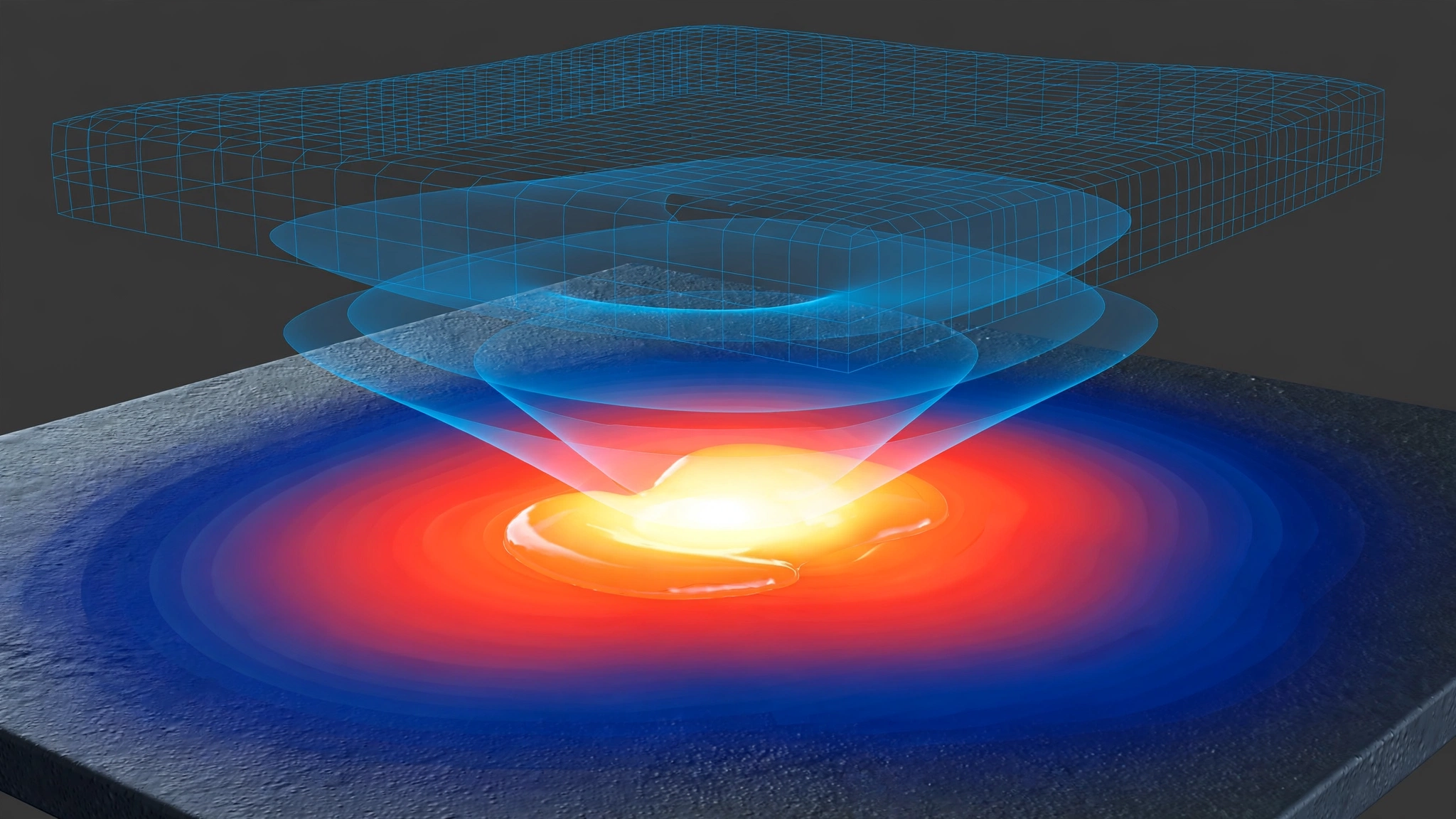
Research Watch: Infrared imaging coupled with 3D multiphysics modeling in laser melting
An open-access study in Communications Materials combines high-speed infrared imaging with transient 3D multiphysics modelling to analyze subsurface melt-pool temperatures and solidification conditions, verified by material characterisation.

Materials Frontier: In-situ spectral monitoring of femtosecond laser annealing in diamond colour centres
A Nature Communications study demonstrates site-selective creation and live spectral monitoring of tin-vacancy colour centres using ion implantation and femtosecond laser annealing.