News & Briefs

Research Watch: The 40-year “green problem” finally explained — why intracavity-doubled green lasers are noisy mode by mode yet quiet in total
On 26 October, Thomas M. Baer, adjunct professor of applied physics at Stanford, wrote in Laser Focus World to explain his 2026 Physical Review A paper: in an intracavity-doubled green laser, each of about 200 longitudinal modes blinks and switches at nearly 100% modulation in bursts tens of microseconds long — yet the total output holds steady at 0.05% rms (DC to 10 MHz). The key is that the doubling crystal is not a one-way converter: it turns green light back into infrared, feeding each mode the phase of the pair that produced it. A fourth-moment functional decreases monotonically on every forward pass through the crystal (a theorem proved in the paper), driving the mode ensemble toward a constant-intensity state. The mechanism was confirmed in an Nd:YVO4 + LBO laser: full-beam versus Fabry-Pérot-filtered noise contrast of 100×, far beyond the statistical-averaging baseline.

Industry: Phase3D launches purpose-built inspection hardware for laser powder bed fusion — structured-light layer measurement moves from off-the-shelf assembly to volume production
On 27 October, TCT Magazine reported that Phase3D has launched a new generation of Fringe Inspection hardware for laser powder bed fusion (LPBF) additive manufacturing systems. The product follows a multi-year development effort: at its heart is a projector customized for LPBF inspection, with an industrial PC, GPU, memory and internal storage integrated into one aluminium passively cooled enclosure, and M12 connectors plus four 5–24 V hardware trigger channels aimed at machine integration and OEM adoption. Structured light measures the build surface during the process, producing quantitative layer-by-layer height data used to investigate powder-bed changes, locate anomalies and quantify their magnitude.

Research Watch: Seven passes through the sample settle the loss budget of ceramic laser materials — Yb:YAG ceramic scattering 0.0093/cm, absorption on par with scattering
On 26 October, a team associated with the 11th Research Institute of China Electronics Technology Group Corporation reported in Applied Physics B (open access, CC BY 4.0) a method combining an integrating sphere with a multipass cell: a 1064 nm beam passes seven times through each sample, cutting the measurement uncertainty for low-loss materials to one seventh of the single-pass value. Comparing pure YAG and Yb:YAG (0.35 at%) ceramics against single crystals of identical composition gave scattering coefficients of 0.0046/cm for YAG ceramic and 0.0093/cm for Yb:YAG ceramic, with absorption coefficients of 0.0267/cm and 0.0221/cm respectively, close to the crystals. In a 10 mm rod model the ceramic’s parasitic loss was about 0.0314 versus 0.0108 for the crystal — roughly triple — yet at 40% output coupling the two loss factors remained close (0.927 versus 0.974).

Industry: Lumibird’s 9M revenue up 8.8% to €168.8M — Photonics +13.5%, photonic medtech +75.9%
On 26 October, European laser technology group Lumibird reported revenue for the first nine months of 2026: consolidated €168.8 million, up 8.8% (+10.3% like-for-like), with third-quarter revenue of €54.1 million, up 12.0%. The Photonics division reached €86.8 million, up 13.5%, including photonic medtech at €16.6 million, up 75.9% (Q3 alone +117.2%), and Defence & Space at €41.8 million, up 10.3%. The Medical division grew 4.3% to €82.0 million, recovering to +14.4% in Q3. The company expects a record fourth quarter and confirmed the Medical division sale will complete by 31 December 2026 at the latest.
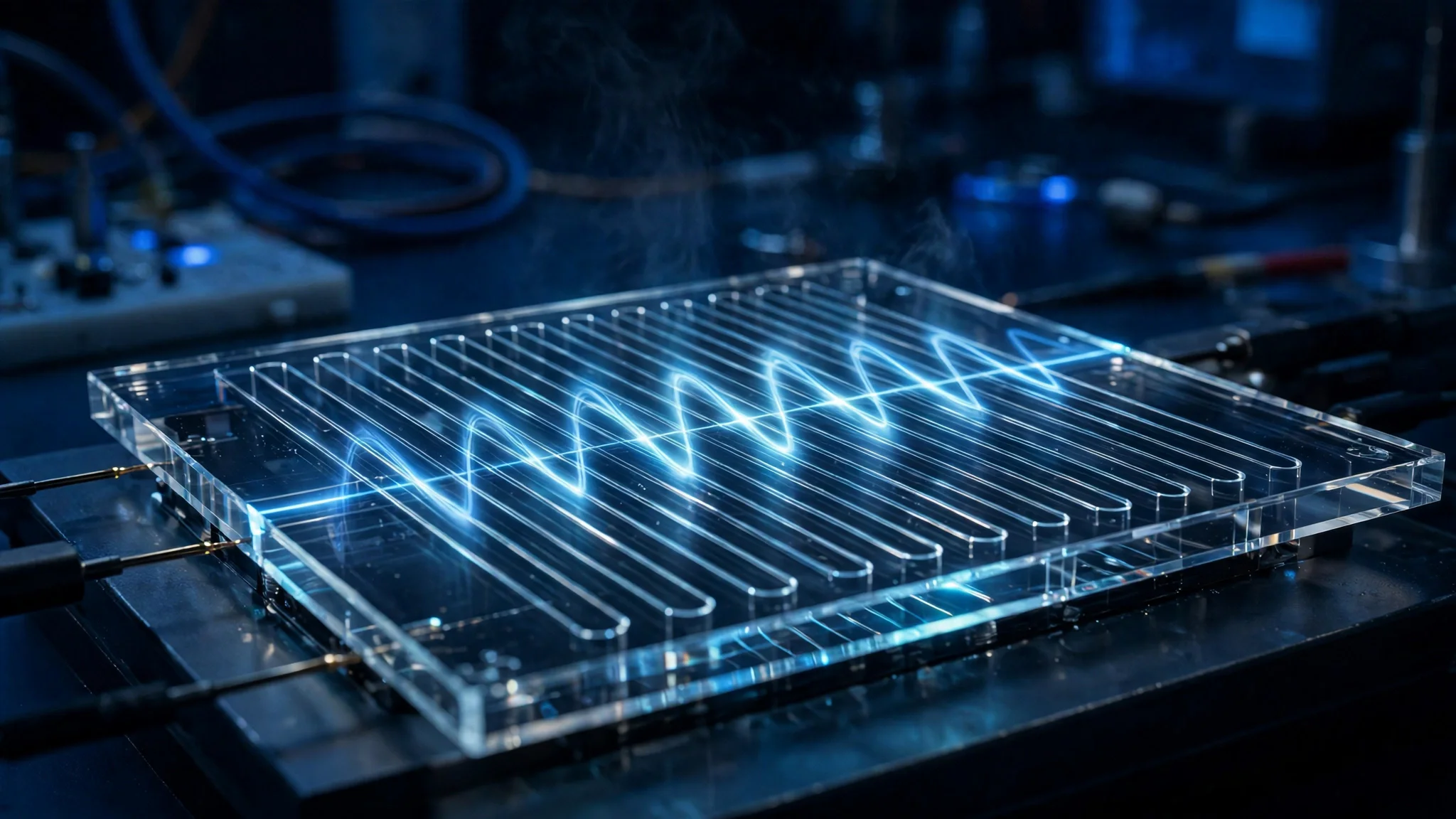
Research Watch: Femtosecond-laser-written gradient waveguide arrays achieve high-fidelity Bloch-oscillation self-imaging — point-to-point energy recovery above 99% in an 8 mm period
On 23 October, a team from Jilin University’s State Key Laboratory of Integrated Optoelectronics and Wuhan Institute of Technology reported in Laser & Photonics Reviews a femtosecond-laser-written composite-waveguide platform that lifts the propagation-constant-gradient limit of conventional laser-written lattices. Combined with sawtooth-profile modulation that locally tailors the effective potential, the design enables tunable Bloch-oscillation dynamics with better wavepacket confinement. Point-to-point imaging recovered more than 99% of the energy in a compact 8 mm period, and the platform transmitted binary-encoded sequences and two-dimensional images in parallel across 633–852 nm with high reconstruction fidelity.

Industry: HSG Laser shows TS2 PRO tube laser and AI CutPilot at FABTECH 2026 — U.S. business up ~200% YoY as the company turns 20
On 23 October, HSG Laser announced via PR Newswire its FABTECH 2026 line-up (21–23 October, Las Vegas Convention Center, booth C3425): the flagship TS2 PRO tube laser cutting machine and the AI process assistant AI CutPilot headlined the stand, alongside a 20th-anniversary ceremony themed “Forged by Laser • Empowered in the Next 20 Years”. The release also disclosed North America milestones: U.S. business growing ~200% year over year, the 500th machine delivered in the U.S., and a 77,000-square-foot Technical & Solution Center running in Geneva, Illinois. The GH series, Store Pro sheet automation, the GFA large-format cutting solution, HC and HS bending systems and teaching-free robotic welding rounded out the showcase.

Research Watch: Spin-decoupled metasurface enables self-healing helical vector beams — trajectory and polarization controlled independently
On 23 October, a team from the University of Padova, Q-TECH and MetaPhoX reported in Laser & Photonics Reviews “helical vector beams” — structured fields merging the spatial polarization structure of vector beams with the self-accelerating spiral dynamics of accelerating waves. A single spin-decoupled metasurface independently controls the response of left- and right-handed circular polarizations; engineering dynamic and geometric phase lets it prescribe the three-dimensional beam trajectory and the local polarization order independently. Telecom-wavelength metasurfaces, made by electron-beam lithography and reactive ion etching, also self-healed both their spatial profile and programmed vectorial state in obstruction experiments.
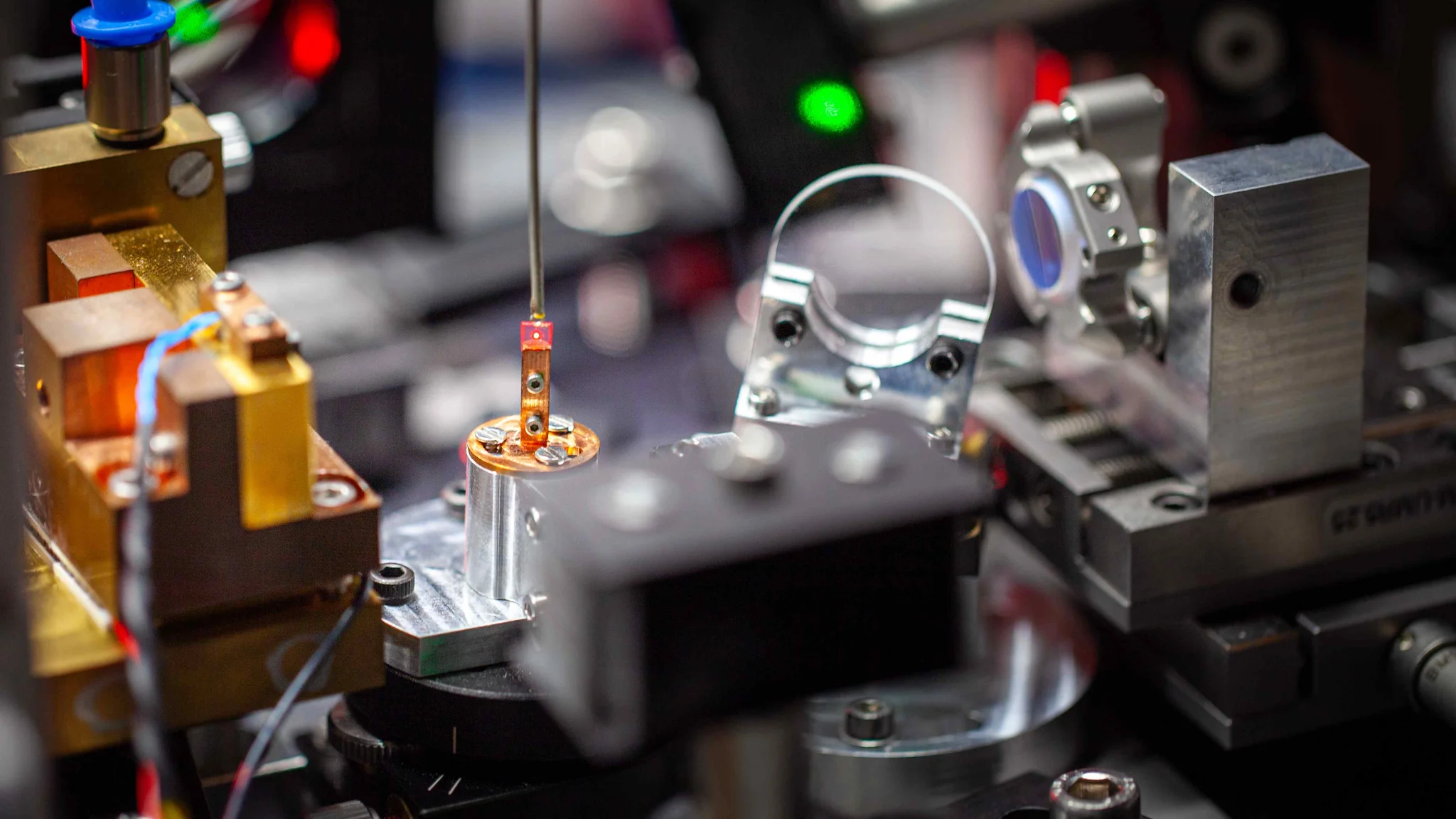
Research Watch: Fraunhofer IAF diamond laser-threshold magnetometer hits 100% optical contrast — up to 590x better sensitivity-to-range ratio
On 22 October, Jan Jeske’s team at the Fraunhofer Institute for Applied Solid State Physics (IAF) reported an experimental breakthrough in laser threshold magnetometry (LTM) in Nature Communications: placing an NV-centre-doped diamond in a 1,042 nm laser cavity as a magnetic-field-dependent loss channel and reading out the magnetic field via the laser signal itself, they achieved the first 100% optical contrast in NV magnetometry (versus a few percent for conventional fluorescence readout). Combined with a coherent laser readout signal of up to 50 mW, sensitivities below 400 fT/√Hz were reached for all three magnetic-field vector components; the sensitivity-limit-to-dynamic-range ratio improves by up to 590x over conventional fluorescence-based NV sensors and vapour-cell magnetometers, while keeping vector capability and an intrinsic dynamic range of several hundred microtesla. The paper is open access (CC BY 4.0), DOI 10.1038/s41467-026-78386-z.

Research Watch: Technion steers electron flow in an STM with sculpted two-colour laser fields — current bursts last just 860 attoseconds
On 22 October, the Technion – Israel Institute of Technology announced that Prof. Michael Krüger’s physics team has achieved precise directional control of electron flow inside the nanoscale gap of a scanning tunnelling microscope (STM) using carefully sculpted infrared laser pulses. Comparing measurements with models, the team reconstructed current bursts lasting just 860 attoseconds, while retaining about 2 nanometres of lateral resolution and sub-ångström height sensitivity — at room temperature and in air. The key: two colours of femtosecond infrared light are focused into the tunnelling gap between the tip and the sample; changing the relative timing of the two colours reshapes the optical waveform, steering electrons from tip to sample or back. Instead of repeatedly switching the laser on and off, the team varied the timing, separating the true ultrafast current from laser-heating noise. The work appears in Nature Photonics (nature.com article s41566-026-02021-y), a step toward an atomic-scale spatiotemporal microscope that can watch electrons move and locate them at once; Krüger sees it as a possible reference for future lightwave-driven electronics.
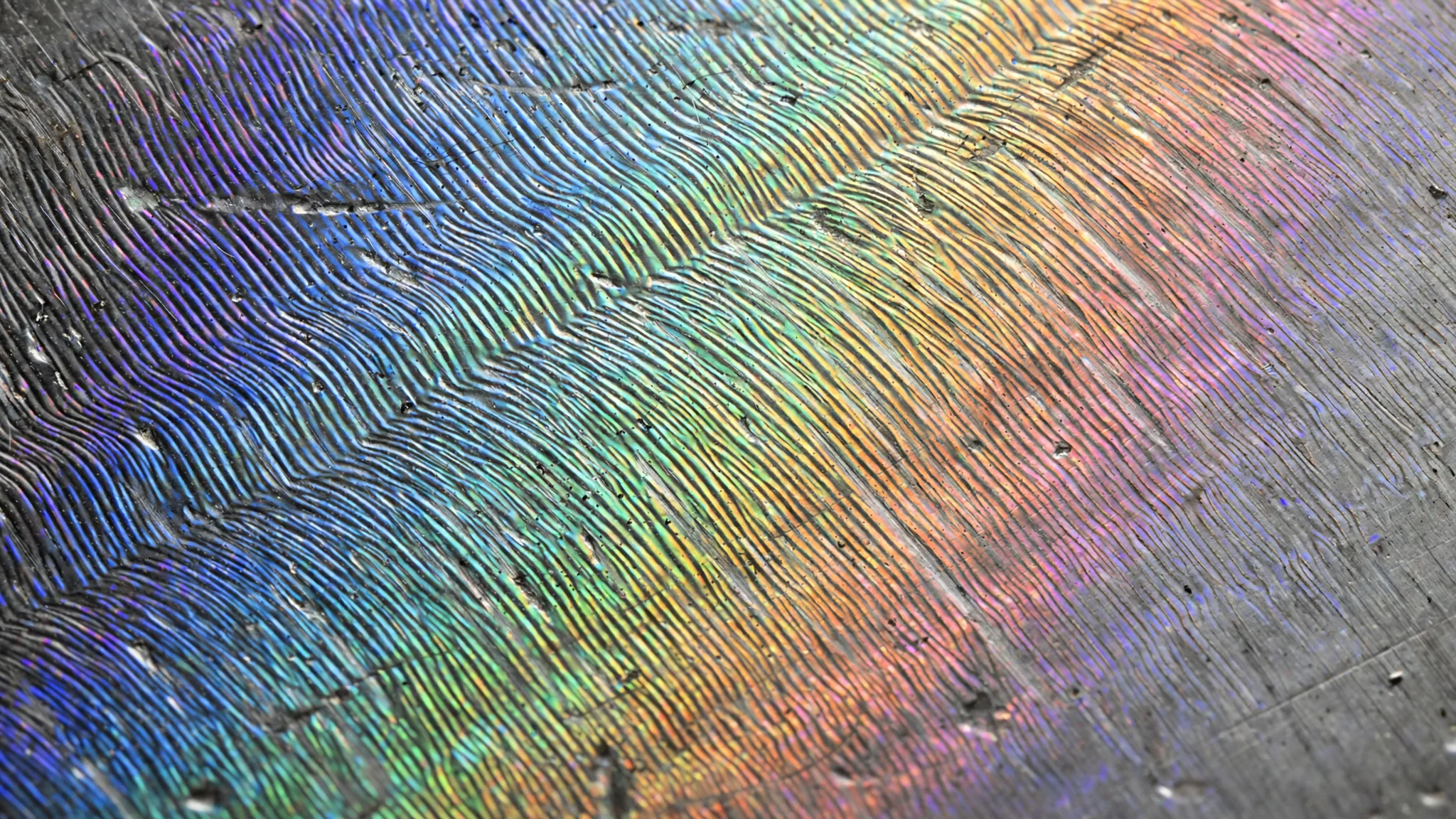
Industry: SurFunction and Precitec to industrialize laser-interference functional surfaces — ELIPSYS platform goes global via a 23-country sales and service network
On 23 October, Photonics Spectra’s weekly brief reported that Germany’s SurFunction and the Precitec Group have signed an agreement to bring functional metasurface technology to global industrial production. SurFunction’s ELIPSYS platform uses direct laser interference patterning (DLIP) to create micro- and nanostructures on metals, plastics, glass and ceramics, imparting lower friction, better electrical contact and controlled wettability without chemical treatments; Precitec will support the rollout through its sales and service network spanning 23 countries, with emphasis on North America and Asia.

Industry: Bodor debuts two premium tube laser cutters in Europe at EuroBLECH 2026 — four-chuck and cut-drill-tap lines in parallel
On 22 October, Bodor Laser announced via Business Wire the European debut of two premium tube laser cutting machines at EuroBLECH 2026 (20–23 October, Hanover, Germany; Hall 13, booths A181/A182, 1,400 m² stand). The four-chuck series uses a fully floating chuck configuration with unrestricted rotation; its dual-process mode improves heavy-tube efficiency, the system automatically matches chuck logic to tube and part length, and intelligent stepless retraction loads short tubes without re-homing. The brand-new double-chuck series integrates cutting, drilling and tapping on one platform (optional 14-position tool magazine), with laser scanning, visual recognition and intelligent sensors detecting tube contours, weld seams and process state in real time for dynamic cutting-centre adjustment. Also on show: the P6 60 kW, P3+Automation-12 kW and i3 6 kW sheet machines (P series up to 4G acceleration, 200 m/min), a 3 kW robotic laser welder and the Pro 1.5 kW handheld welder. The release adds: service centres in Germany and Hungary, 180+ countries and 500+ service locations worldwide; per FORWARD Business Information (Shenzhen), Bodor ranked No. 1 globally in 1 kW+ laser cutting machine sales for seven consecutive years (2019–2025).

Industry: NVIDIA lines up six supply-chain partners — CPO optical-engine capacity targeted at 15x by mid-2027
On 21 October, NVIDIA announced at GTC Berlin an expansion plan with six supply-chain partners (Amkor, IBIDEN, KYEC, Samsung Electro-Mechanics, SPIL and Unimicron) to meet AI-infrastructure demand. Key figures: with Siliconware Precision Industries (SPIL), optical-engine capacity for co-packaged optics (CPO) is targeted at 15x by mid-2027 and to double again by end-2028; substrate agreements with IBIDEN, Samsung Electro-Mechanics and Unimicron will in aggregate drive a 2.5x capacity increase over three years; Amkor’s interposer wafer capacity rises more than 300% by end-2028; testing capacity doubles from 2026 to 2027, including a $1.1 billion capacity-reservation advance to King Yuan Electronics (KYEC) for new U.S. testing facilities targeting high-volume production in April 2027. “We are in the midst of the largest infrastructure buildout in human history. Demand is extraordinary. Capacity is the constraint,” said Jensen Huang in the release.